
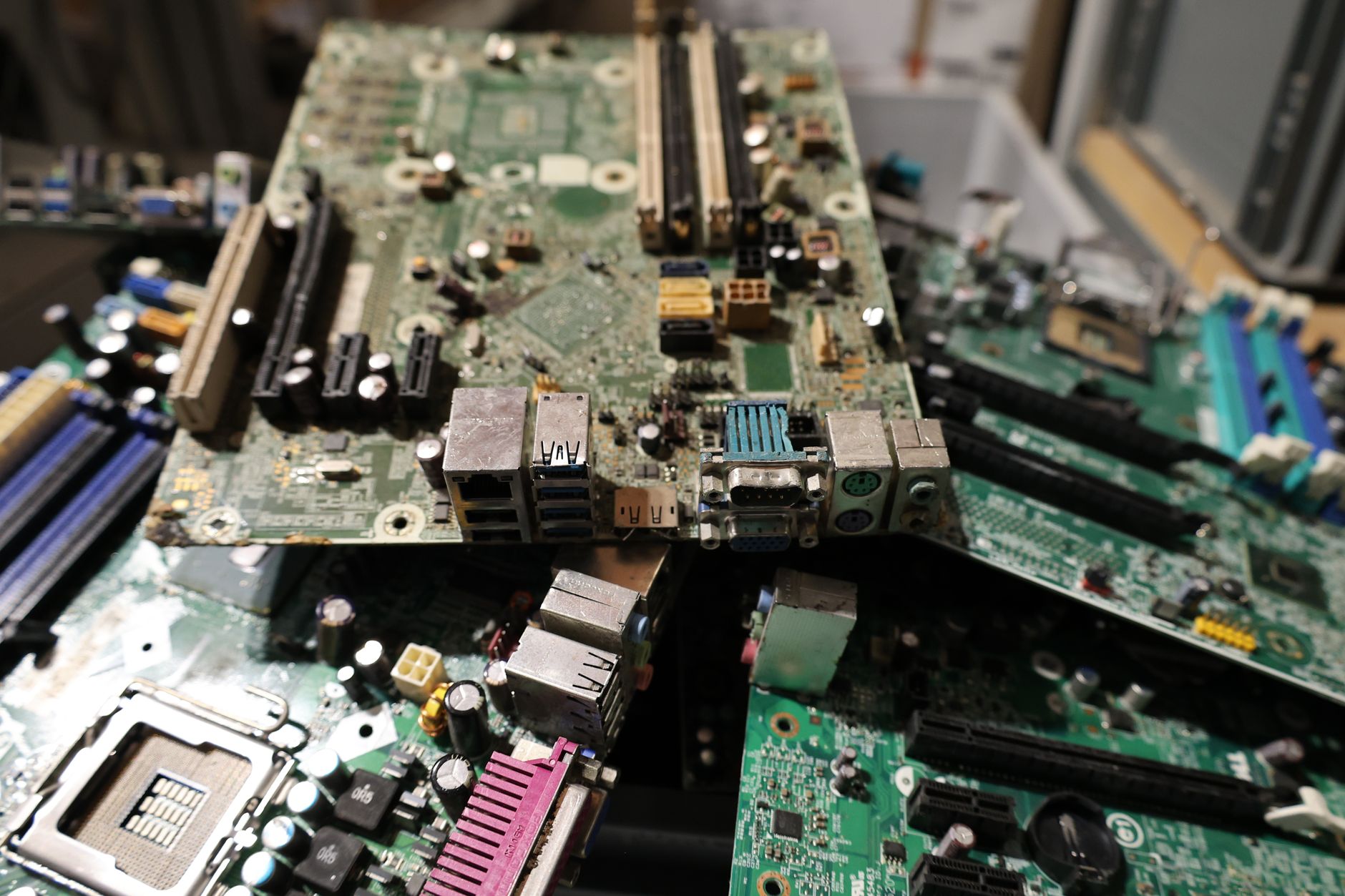
E-Waste Disposal in Kuala Lumpur: A Secure, Certified & Practical Guide (2026–2027)
Electronic waste is one of the fastest-growing waste streams in Malaysia — and Kuala Lumpur sits at the centre of it. Every year, thousands of tonnes of discarded laptops, desktop computers, servers, mobile phones, and peripherals are replaced by businesses and individuals upgrading their technology. The question is: where does all that old equipment go, and is your data going with it?
This guide breaks down everything you need to know about e-waste disposal in Kuala Lumpur in 2026–2027 — from what counts as e-waste and which regulations apply, to how data erasure works, what certified disposal actually means, and how much it costs.
What Is E-Waste — and Why Does It Matter in Malaysia?
E-waste (electronic waste) refers to any discarded electrical or electronic equipment, including:
- Desktop computers, laptops, and tablets
- Servers, networking equipment, and UPS units
- Mobile phones and accessories
- Monitors, printers, and scanners
- Cables, keyboards, mice, and other peripherals
- Photocopiers, fax machines, and office electronics
In Malaysia, e-waste is classified as scheduled waste under the Environmental Quality Act 1974 (EQA), specifically under Scheduled Waste SW110 (waste electrical and electronic equipment). This legal classification means it cannot be disposed of in ordinary municipal bins or general waste streams. Doing so is a punishable offence under Malaysian law.
The Department of Environment Malaysia (DOE) under the Ministry of Natural Resources and Environmental Sustainability regulates how e-waste is collected, transported, stored, treated, and recycled. Non-compliance can result in significant fines and legal liability — a risk no business in KL should take lightly.
Beyond legal compliance, e-waste contains hazardous materials like lead, mercury, cadmium, and brominated flame retardants. Improper disposal contaminates soil and water. Responsible recycling, on the other hand, recovers valuable materials like gold, copper, and rare earth elements — reducing the need for environmentally destructive mining.
The Biggest Risk Most Businesses Overlook: Your Data
For individuals disposing of a personal phone, data security is a concern. For businesses disposing of IT assets — servers, workstations, laptops used by employees — it is a critical compliance obligation.
When a hard drive, SSD, or mobile device leaves your premises without proper data erasure, your company's confidential information, client records, financial data, and employee details remain readable using freely available recovery tools. This is not a theoretical risk; data breaches from improperly retired IT equipment happen regularly.
What Is Secure Data Erasure?
Data erasure (also called data sanitisation or secure wiping) is the process of permanently overwriting data on storage media so it cannot be recovered. The key distinction is that this is different from simply deleting files or formatting a drive — both of which leave data recoverable.
The internationally recognised standard for data sanitisation is NIST SP 800-88 (Guidelines for Media Sanitization), published by the US National Institute of Standards and Technology. This standard defines three levels:
- Clear — Logical overwriting techniques suitable for standard protection
- Purge — Higher-assurance techniques including cryptographic erasure and degaussing
- Destroy — Physical destruction for media where sanitisation is not feasible
Another commonly referenced standard is DoD 5220.22-M, a US Department of Defense specification that specifies multi-pass overwriting patterns. Tools like DBAN (Darik's Boot and Nuke) implement these algorithms and are used by reputable IT asset disposal providers.
For organisations handling sensitive personal data, compliance with Malaysia's Personal Data Protection Act 2010 (PDPA) requires that personal data no longer in use be destroyed or permanently deleted. Proper data erasure during IT disposal is therefore a PDPA compliance requirement, not just good practice.
What to ask your disposal provider:
- Do they issue a Certificate of Data Destruction for each device?
- Which erasure standard do they use (NIST 800-88, DoD, etc.)?
- Is the process auditable, and can you receive an asset-level report?
- Are their technicians trained and bound by confidentiality agreements?
A provider that cannot answer these questions clearly should not be handling your business's IT equipment.
DOE Authorisation: What It Means and Why It Matters
The Department of Environment (DOE) Malaysia requires that any organisation that collects, transports, or processes scheduled waste — including e-waste — must hold a valid licence or authorisation under the Environmental Quality (Scheduled Wastes) Regulations 2005.
There are two key authorisation categories relevant to e-waste:
- SW Collectors/Transporters — Companies licensed to collect and transport e-waste from premises to processing facilities
- SW Treatment/Recovery Facilities — Companies licensed to actually process, recycle, or treat e-waste
Using an unauthorised collector — even if they offer free pickup — exposes your business to legal liability, as the responsibility for proper disposal does not automatically transfer to an unlicensed third party. If an unlicensed collector dumps your equipment illegally, your business may still be implicated.
How to verify DOE authorisation:
- Request the company's DOE licence number and verify it on the DOE portal
- Ask for their scheduled waste facility address and licensed capacity
- Confirm they can provide a legally compliant consignment note (a transfer document required by DOE for scheduled waste)
KL-Area Disposal Options
In Kuala Lumpur and the Klang Valley, several disposal channels exist:
- Kuala Lumpur City Council (DBKL) periodically organises e-waste collection drives in partnership with DOE-registered recyclers — free for residents but limited in frequency and scope
- Retail take-back programmes such as TBM E-Waste Recycling Program allow consumers to drop off small electronics at retail locations
- IPC Recycling and Buy Back Centre (Mutiara Damansara) offers walk-in recycling with some buy-back value for functional devices
- Volt Recycle and ERTH Recycling are private operators in the KL/Selangor area offering scheduled waste collection services
- MYPC2U has offered IT asset recovery services with some resale component for functional equipment
For corporate and bulk IT asset disposal, retail drop-off points are rarely practical. Businesses managing dozens to hundreds of devices require a structured, documented, on-site or scheduled pickup service with proper chain of custody documentation.
Step-by-Step: How E-Waste Disposal Works (Corporate & Individual)
Understanding the process removes uncertainty and helps you prepare:
Step 1: Inventory Your Equipment
List all devices to be disposed of — model, serial number, storage type (HDD/SSD), and whether they contain sensitive data. This inventory forms the basis of your chain of custody.
Step 2: Contact a Certified Disposal Provider
Reach out to a DOE-authorised collector serving Kuala Lumpur and confirm:
- Service coverage (KL, Selangor, Putrajaya?)
- Whether they offer on-site pickup or require you to deliver
- Their data erasure process and certification output
- Whether they provide a consignment note and destruction certificate
Step 3: Schedule Pickup or Drop-Off
For corporate clients, most reputable providers offer scheduled on-site pickup in KL and Greater Klang Valley. Turnaround from initial inquiry to completed pickup typically ranges from 2 to 7 business days, depending on volume and logistics. Urgent corporate collections may be available on shorter notice.
Step 4: Data Erasure or Physical Destruction
Before or immediately after collection, data-bearing devices should be sanitised:
- Software-based erasure is performed on functional drives using certified tools
- Degaussing is used for magnetic media that cannot be wiped conventionally
- Physical shredding or drilling is used for devices that are non-functional, heavily damaged, or where purge-level destruction is required
Step 5: Receive Documentation
You should receive:
- A Certificate of Data Destruction per device or per batch
- A DOE consignment note confirming legal transfer of scheduled waste
- An asset disposal report listing each item by serial number and disposal method
Step 6: Responsible Recycling at Facility
Once data is cleared, usable components are recovered for refurbishment or parts. Non-functional materials are processed at DOE-licensed recycling facilities where metals, plastics, and circuit board materials are recovered responsibly.
Cost Structure: Free vs. Paid E-Waste Disposal
This is where many providers are unhelpfully vague. Here is a realistic breakdown:
Free E-Waste Disposal
- Available through DBKL collection drives, retail take-back programmes (TBM, IPC), and some private collectors for high-value scrap (copper-rich cables, gold-bearing circuit boards)
- Typically covers consumer electronics in small quantities
- Usually no data erasure service is included — not suitable for business IT assets
- No documentation or chain of custody provided
Paid E-Waste Disposal (Corporate/IT Asset Focused)
- Fees vary by device type, volume, and services required
- Data erasure with certification: typically charged per device or per batch (pricing varies by provider — request a quote based on your inventory)
- Pickup logistics: may be free above a minimum volume threshold; smaller collections may incur a transport fee
- Physical destruction (shredding): generally higher cost than software erasure due to equipment and material handling
- Some providers offer revenue-share or buy-back for functional equipment that retains resale value, which can offset disposal costs
Important: The cheapest option is rarely the right option when data security and legal compliance are involved. A free pickup from an unverified collector with no documentation is a liability, not a saving.
Can You Dispose of Mixed IT Equipment Together?
Yes — and reputable corporate IT disposal providers are set up to handle mixed loads. A typical corporate disposal might include:
- Desktop towers and laptops
- External hard drives and USB storage
- Monitors and screens
- Servers and rack equipment
- Network switches, routers, and cabling
- Printers, projectors, and UPS units
Each category may be handled differently (different recycling streams, different erasure requirements for storage-bearing devices), but a qualified provider will sort, process, and document each item appropriately. You do not need to pre-sort or separate equipment before pickup — just have your inventory list ready.
Malaysia's E-Waste Regulations: Compliance Summary
| Regulation | Relevance |
|---|---|
| Environmental Quality Act 1974 | E-waste classified as scheduled waste; disposal regulated |
| EQ (Scheduled Wastes) Regulations 2005 | Licensing requirements for collectors, transporters, and processors |
| Personal Data Protection Act 2010 | Requires destruction of personal data when no longer needed |
| DOE Authorisation | Mandatory for any business handling scheduled waste commercially |
For businesses, maintaining compliance means using only DOE-authorised collectors, retaining consignment notes as proof of lawful disposal, and ensuring data destruction is documented for PDPA and internal governance purposes.
Making the Right Choice for Your Business
Whether you are a small KL business retiring five old computers or a large enterprise decommissioning a data centre, the principles are the same:
- Verify DOE authorisation before handing over any equipment
- Insist on data destruction certification for every storage-bearing device
- Ask about the disposal standard used (NIST 800-88 or equivalent)
- Request full documentation — consignment notes, asset reports, certificates
- Choose a provider with clear service coverage in KL and Selangor
At KCOMSB, we provide IT asset disposal and data erasure services for businesses across Kuala Lumpur and Malaysia, combining regulatory compliance with documented data security at every step. If you are ready to retire your IT equipment responsibly, reach out to our team for a no-obligation assessment of your disposal needs.
Updated for 2026–2027. Regulations and service provider details are subject to change — always verify DOE authorisation status directly before engaging any e-waste disposal service.
