
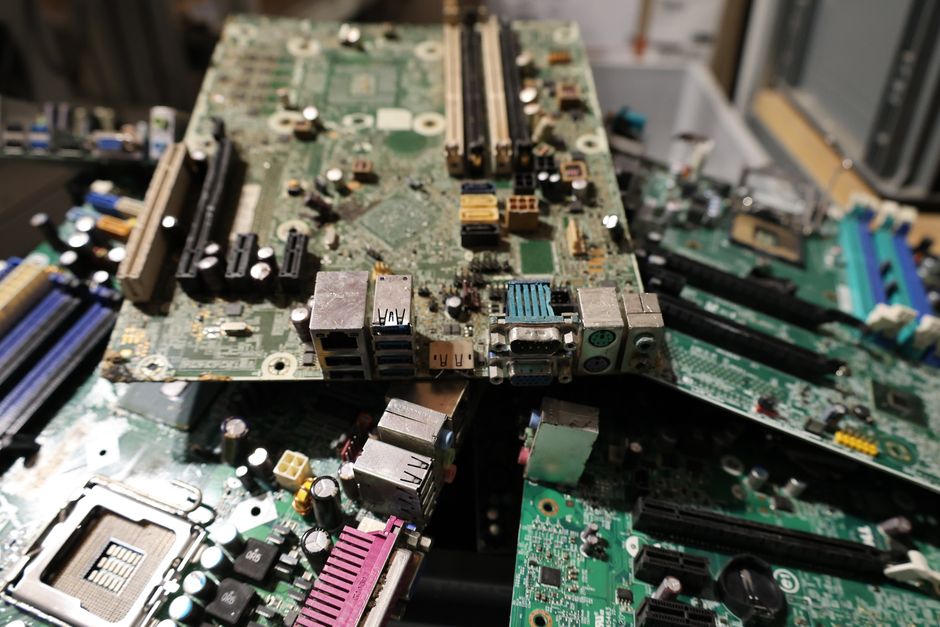
When a Malaysian enterprise retires a server rack, refreshes its laptop fleet, or decommissions a data centre, the equipment leaving the building doesn't just carry a depreciated book value—it carries live data, regulatory obligations, and potential liability. Treating IT asset disposal as a simple logistics task is one of the most common—and costly—mistakes organisations make.
KCOMSB provides a professional IT asset disposal service in Malaysia designed to protect your organisation on three fronts: data security, regulatory compliance, and financial return. This page explains exactly how that works, what to expect, and how to evaluate any provider you consider.
What Is IT Asset Disposition (ITAD) and Why Does It Matter for Malaysian Businesses?
IT Asset Disposition (ITAD) is the structured, auditable process of retiring end-of-life IT equipment in a way that eliminates data risk, satisfies legal requirements, and recovers residual asset value where possible.
For Malaysian businesses in 2026–2027, ITAD matters for three converging reasons:
- Data breaches are expensive. A device that leaves your premises with readable data on it remains your liability—even after you've physically handed it over.
- Regulation has teeth. Malaysia's Personal Data Protection Act (PDPA) and environmental legislation both impose obligations on how you handle retiring equipment.
- Old IT equipment has value. Properly assessed and refurbished hardware can generate meaningful cost offsets against your disposal and refresh budget.
Disposing of IT equipment without a certified ITAD process is not just environmentally irresponsible—it is a measurable business risk.
Malaysian Regulatory Requirements You Cannot Ignore
Personal Data Protection Act (PDPA)
Malaysia's PDPA requires organisations to take practical steps to prevent unauthorised access, loss, or disclosure of personal data—including data stored on decommissioned hardware. Failing to securely destroy data on retired devices before disposal is a direct compliance gap. Amendments and enforcement activity in recent years have made this an active rather than theoretical risk.
E-Waste and Environmental Regulations
The Ministry of Natural Resources and Environmental Sustainability governs the disposal of scheduled wastes under the Environmental Quality Act 1974, including e-waste categories that cover IT equipment. Organisations have an obligation to ensure their retired hardware is handled by licensed processors—not dumped, sold informally, or exported without authorisation.
Legal penalties for improper IT asset disposal in Malaysia can include fines, licence revocations, and reputational damage. More immediately, improper disposal that results in a data breach carries its own PDPA enforcement exposure.
Certified Data Erasure: What Makes It Different from Physical Destruction?
This is one of the most important distinctions in ITAD, and one that is frequently misunderstood.
Physical destruction (shredding, degaussing, crushing) renders a device non-functional and data unrecoverable. It is the right choice for severely damaged media, highly classified environments, or storage devices that cannot be wiped to standard.
Certified data erasure overwrites all addressable storage locations using a recognised standard—most commonly:
- NIST 800-88 (Guidelines for Media Sanitization) — the current international benchmark for software-based sanitisation, covering Clear, Purge, and Destroy methodologies appropriate to different media types.
- DoD 5220.22-M — a legacy US Department of Defense multi-pass overwrite standard still referenced by many enterprise procurement and security policies.
The critical difference is documentation. Certified erasure produces a Certificate of Data Erasure for every device processed, recording the serial number, erasure method, date, technician, and pass/fail result. This audit trail is what gives your compliance and legal teams something to show during a PDPA audit or client due diligence review.
Physical destruction also produces a Certificate of Destruction, but the device has no residual value after processing. Certified erasure, where appropriate, allows the device to re-enter service—generating the refurbishment value that offsets your disposal costs.
Types of IT Equipment Covered
KCOMSB's IT asset disposal service in Malaysia covers the full spectrum of enterprise and SME hardware:
- Servers and storage arrays — Dell PowerEdge, HP ProLiant, Lenovo ThinkSystem, NAS/SAN devices
- Workstations and desktops — HP, Dell, Lenovo business-class units
- Laptops and ultrabooks — including business lines from all major OEMs
- Networking equipment — routers, switches, firewalls, access points (Cisco, Juniper, Aruba, and others)
- Printers and peripherals — multifunction devices, scanners, UPS units
- Mobile devices — smartphones and tablets under MDM retirement
- Data centre infrastructure — racks, PDUs, KVM switches, cabling
If your equipment contains a storage medium—even embedded flash on a network switch—it falls within scope for data sanitisation before disposal.
Asset Recovery and Value: How Old IT Equipment Offsets Your Costs
One of the most consistently underexplored aspects of ITAD among Malaysian businesses is asset value recovery. Equipment that appears worthless often has measurable secondary market value when assessed by an experienced ITAD provider.
The value recovery process works as follows:
- Inventory and grading — Each device is catalogued by make, model, configuration, and physical condition.
- Market valuation — Current secondary market pricing is applied based on buyer demand for that specification.
- Refurbishment assessment — Devices that meet the threshold for refurbishment are processed, tested, and certified for resale.
- Revenue sharing or cost offset — Depending on your agreement structure, recovered value is applied against disposal fees or returned directly.
It is important to note that residual value depends on equipment age, condition, and current market demand—no responsible provider can guarantee a fixed resale figure without assessment. What KCOMSB can do is provide a transparent valuation report so your finance team has accurate numbers before committing to disposal.
For a typical enterprise laptop refresh cycle (3–4 year old business-class units in good condition), asset recovery can meaningfully reduce net disposal costs. For older or damaged equipment, responsible recycling with zero revenue return may be the outcome—but you still gain the compliance documentation.
The ITAD Process: Step by Step
Understanding the process helps you prepare internally and set expectations with stakeholders.
Step 1 — Pre-Disposal Inventory
Before contacting any provider, compile an asset register: make, model, serial number, approximate condition, and estimated quantity. This allows for accurate quoting and logistics planning. It also gives your IT and security teams a baseline for data classification—knowing what data resided on which devices informs the appropriate sanitisation method.
Step 2 — Collection and Logistics
KCOMSB provides nationwide collection across Malaysia, including Kuala Lumpur, Selangor, Penang, Johor Bahru, Ipoh, and surrounding regions. Collection timelines are agreed in advance, with chain-of-custody documentation initiated at pickup.
Step 3 — Secure Intake and Asset Logging
Upon arrival at the processing facility, each item is logged against your inventory, assigned a unique processing reference, and photographed. Discrepancies between collected and received quantities are flagged immediately.
Step 4 — Data Sanitisation
Based on media type and your security requirements, devices undergo certified erasure (NIST 800-88 or DoD 5220.22-M) or physical destruction. Every device receives an individual sanitisation record.
Step 5 — Grading, Refurbishment, and Valuation
Devices cleared of data are graded for condition and assessed for secondary market value. Refurbishable units are processed accordingly. Non-recoverable units are segregated for responsible recycling.
Step 6 — Responsible Recycling
Materials from non-recoverable devices—metals, circuit boards, plastics—are processed through licensed downstream recycling partners. This ensures compliance with Malaysian environmental regulations and responsible handling of hazardous materials such as lead, mercury, and cadmium present in older electronics.
Step 7 — Documentation and Compliance Reporting
You receive a complete disposal report including: Certificate of Data Erasure or Certificate of Destruction per device, asset reconciliation report, environmental compliance statement, and any applicable valuation summary.
In-House Disposal vs. Professional ITAD: A Practical Comparison
Some organisations attempt to manage IT disposal internally—typically by having IT staff delete files, reformat drives, and arrange for equipment to be donated or sold privately. This approach carries significant risks:
| Factor | In-House Disposal | Professional ITAD (KCOMSB) |
|---|---|---|
| Data security | High risk — file deletion is not data erasure | Certified erasure to NIST/DoD standard |
| Compliance documentation | None | Per-device certificates and audit trail |
| PDPA liability | Retained by organisation | Mitigated through certified process |
| Asset value recovery | Ad hoc, often undervalued | Structured market-rate valuation |
| Environmental compliance | Often non-compliant | Licensed downstream recycling |
| Staff time and resource | Significant internal cost | Managed externally |
The hidden cost of in-house disposal—staff time, compliance exposure, and foregone asset value—typically exceeds the cost of engaging a professional provider.
How to Choose an IT Asset Disposal Provider in Malaysia
Not all ITAD providers offer the same level of security, documentation, or environmental accountability. When evaluating providers, ask:
- What data erasure standards do you certify to? Look for NIST 800-88 and DoD 5220.22-M at minimum, with individual device certificates.
- Are you licensed to handle scheduled e-waste under Malaysian environmental law? Request documentation.
- What downstream recycling partners do you use? Responsible providers have transparent, auditable recycling chains.
- What certifications do you hold or work toward? Internationally recognised frameworks such as ISO 27001 (information security management), R2 (Responsible Recycling), and e-Stewards signal credible operational standards.
- Can you provide a client reference from a comparable Malaysian organisation? Testimonials from recognised local enterprises carry weight.
- What does your liability coverage look like? A credible provider can articulate their insurance and liability position clearly.
- How quickly can you mobilise collection? For time-sensitive decommissioning projects, turnaround and scheduling flexibility matter.
What Happens After Your Equipment Is Processed?
A question many clients don't think to ask: what actually happens to the materials?
For refurbished devices, equipment re-enters the secondary market—often within Malaysia or across the ASEAN region—extending useful life and reducing demand for new manufacturing.
For non-recoverable materials, responsible recycling involves separating precious metals (gold, silver, copper, palladium from circuit boards), ferrous and non-ferrous metals, and managed disposal of hazardous components. Licensed recyclers operate under regulatory oversight, and KCOMSB's downstream partners provide environmental compliance documentation as part of the overall disposal record.
Ready to Start? Here's What to Do Before You Call
To make your first conversation with KCOMSB as productive as possible:
- Pull your asset register — quantities, models, approximate ages.
- Identify your data sensitivity level — does any equipment contain regulated personal data, financial records, or confidential IP?
- Note your timeline — office moves, lease endings, and audit deadlines create real scheduling constraints.
- Flag any special handling requirements — large format equipment, data centre decommissioning, or multi-site collections across Malaysian states.
With this information ready, KCOMSB can provide an accurate scope, timeline, and cost estimate—including any projected asset recovery value—so your organisation can make an informed, compliant decision.
KCOMSB provides certified IT asset disposal services across Malaysia, including Kuala Lumpur, Selangor, Penang, Johor Bahru, Ipoh, and nationwide. Contact our team to discuss your disposal project and request a no-obligation assessment.
