
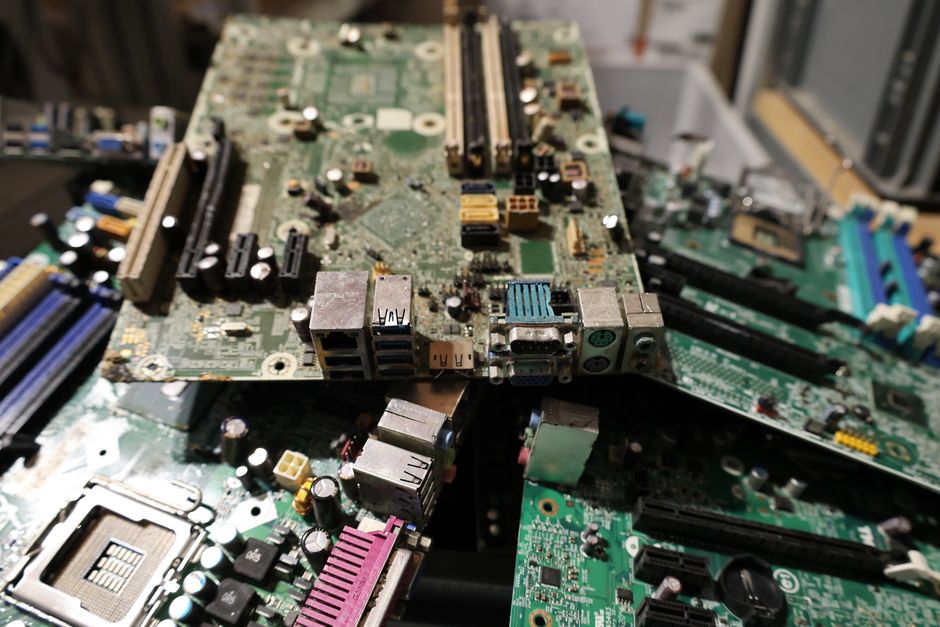
Every year, millions of laptops, smartphones, servers, and peripherals reach end-of-life across Malaysia. Many end up in general landfill — an outcome that is both environmentally harmful and, for businesses, legally risky. Whether you are clearing out a home office or decommissioning an entire data centre, finding reliable e-waste disposal near you in Malaysia requires more than a quick Google search. You need a collector who is legally registered, genuinely secure with your data, and transparent about how they pay — or charge — for the service.
This guide cuts through the noise. We cover what qualifies as e-waste, how to verify collector legitimacy, how data erasure actually works, and what your options are if you live outside the Klang Valley.
What Qualifies as E-Waste? Accepted Devices Explained
Under Malaysia's Environmental Quality (Scheduled Wastes) Regulations 2005, electronic waste is classified as a scheduled waste (SW110), meaning it cannot be disposed of through ordinary municipal waste streams. Broadly, e-waste includes:
- Computing equipment: laptops, desktops, servers, tablets, monitors
- Mobile devices: smartphones, feature phones, GPS units
- Storage media: hard drives, SSDs, USB drives, optical discs
- Peripherals: keyboards, mice, printers, scanners, projectors
- Networking equipment: routers, switches, access points
- Consumer electronics: televisions, audio systems, cameras
- Batteries and power supplies: including UPS units and power banks
Most authorized collectors accept both working and non-working devices, though the payment model (or whether a fee applies) often depends on the device's condition, age, and residual market value. Always confirm accepted categories with your chosen collector before scheduling.
DOE-Registered Collectors: Why Registration Matters
The Department of Environment (DOE) Malaysia licenses and oversees scheduled waste collectors under the Environmental Quality Act 1974. A DOE-registered collector has demonstrated compliance with handling, transportation, and processing standards — meaning your devices will not be illegally exported, informally dismantled, or dumped.
How to verify a collector's DOE registration:
- Request the collector's DOE licence number directly.
- Cross-reference it on the DOE's official portal (alam.doe.gov.my) or contact the DOE regional office for your state.
- Confirm the licence is current and covers the specific waste categories you are disposing of.
Two commonly referenced authorized collectors in Malaysia are ERTH and Again Eco, both of which operate collection programmes in parts of the Klang Valley. However, coverage, eligibility criteria, and payment structures vary — always check their current terms, as these change.
Warning: Unregistered collectors may offer attractive buyback prices but expose you to legal liability. Under Malaysian law, the original waste generator retains partial responsibility if their scheduled waste is improperly processed.
Free vs. Paid E-Waste Pickup: Understanding Payment Models
Not all e-waste collection is free, and not all of it results in payment to you. Here is how the main models work in 2026-2027:
1. Free Pickup with Payment to You (Buyback Model)
For devices with residual value — recent-generation laptops, smartphones in working condition, enterprise networking gear — some collectors offer free pickup and a buyback payment, often processed via DuitNow or bank transfer. Payment amounts depend on device specifications, condition, and current commodity prices. Expect variability; no legitimate collector can guarantee a fixed rate.
2. Free Pickup, No Payment
For older or non-working devices with minimal resale value, collectors may offer free pickup as a community or CSR service without a buyback component. This is common for household e-waste drop-off programmes.
3. Paid Disposal (You Pay the Collector)
Certain items — CRT monitors, large UPS batteries, refrigerant-containing equipment — may attract a processing or disposal fee due to the cost of handling hazardous components like lead, mercury, and refrigerants. Businesses generating large volumes of mixed-condition assets should request a full itemized quote.
DuitNow payments are now widely used for fast, traceable buyback disbursements. If instant payment is a priority, confirm the payment timeline during booking — some collectors process payments within 24 hours of collection; others batch payments weekly.
Data Erasure and Secure IT Asset Disposal: What Actually Happens to Your Data?
This is the area where most generic recycling guides fall short — and where businesses face the greatest risk.
When you hand over a laptop, hard drive, or server, the data on that device does not automatically disappear. Standard factory resets and even basic formatting leave data recoverable with readily available tools. For businesses subject to Malaysia's Personal Data Protection Act 2010 (PDPA), improper data disposal is a compliance breach with real legal consequences.
Industry-Standard Data Erasure Methods
Software-based erasure overwrites storage media using internationally recognized standards such as:
- NIST SP 800-88 (U.S. National Institute of Standards and Technology guidelines for media sanitization)
- DoD 5220.22-M (U.S. Department of Defense standard)
These methods are suitable for functional drives. A reputable IT asset disposal (ITAD) provider will generate a certificate of data erasure for each device, specifying the serial number, erasure standard applied, technician, and date.
Physical destruction (shredding or degaussing) is used for drives that are non-functional, contain highly sensitive data, or cannot be reliably wiped via software. Physical destruction certificates document that the media has been rendered unrecoverable.
What to look for in a provider:
- Certificate of data erasure per device (not just a batch certificate)
- Compliance with R2 (Responsible Recycling) or e-Stewards certification standards — internationally recognized benchmarks for responsible ITAD
- Clear chain-of-custody documentation from collection to processing
At KCOMSB, data security is treated as a non-negotiable component of every IT asset disposal engagement. Our process includes documented erasure or destruction for every storage device, with full reporting for corporate clients who require audit trails.
How to Book an E-Waste Pickup Near You: Step-by-Step
Whether you are disposing of three laptops or three hundred servers, the booking process follows a consistent pattern with reputable providers:
Step 1: Inventory your assets
List device types, approximate quantities, and condition (working/non-working). For businesses, note whether drives have been encrypted or previously wiped.
Step 2: Contact the provider for a quote or eligibility check
Most collectors have minimum quantity thresholds. For example, some services require a minimum of 5–10 devices for free pickup. Below this threshold, you may need to use a drop-off point or postal option.
Step 3: Confirm data erasure requirements
If you are a business, specify that you require certified data erasure and request sample documentation before committing.
Step 4: Schedule the collection
Provide your address, preferred date and time, and access details (e.g., loading bay, security sign-in procedures for corporate premises).
Step 5: Collection and documentation
On collection day, ensure a handover receipt is issued listing every device by serial number or asset tag. This is your proof of transfer of responsibility.
Step 6: Receive your certificate and payment
Data erasure certificates and buyback payments (where applicable) are typically issued within 1–5 business days of collection, depending on the provider.
Geographic Coverage: Klang Valley, Selangor, KL, and Beyond
The majority of free pickup services are concentrated in the Klang Valley, covering central Kuala Lumpur, Petaling Jaya, Shah Alam, Subang Jaya, Cheras, Ampang, and surrounding Selangor districts.
If you are outside the Klang Valley, options include:
- Pos Malaysia shipping: Some collectors, including Again Eco, offer a mail-in programme where you ship devices via Pos Malaysia at your own cost and receive payment upon receipt and assessment. This extends coverage to all peninsular states.
- Scheduled collection runs: Providers like KCOMSB can arrange periodic collection visits to Penang, Johor Bahru, Ipoh, Melaka, and other major urban centres, particularly for corporate clients with sufficient volume.
- State-level DOE drop-off points: The DOE and some local councils operate scheduled e-waste collection events, particularly in larger state capitals. Check your local council website or the DOE's event calendar.
Tip: For businesses in secondary cities with 20+ devices to dispose of, contact ITAD providers directly. Many will arrange a dedicated collection at no additional charge when volume justifies it.
Corporate vs. Individual E-Waste Disposal
The process and requirements differ significantly between consumer and business disposals:
| Factor | Individual | Corporate / Business |
|---|---|---|
| Volume threshold for free pickup | Typically 5–10 devices | Often waived for large lots |
| Data erasure certificate | Optional | Usually required for PDPA compliance |
| Chain-of-custody documentation | Rarely provided | Standard requirement |
| Payment model | Buyback or free disposal | Negotiated per engagement |
| Regulatory obligation | Minimal | PDPA, scheduled waste regulations |
Businesses should also be aware that certain sectors — healthcare, finance, legal, and government — have heightened data handling obligations that necessitate certified destruction rather than resale-oriented erasure.
Environmental and Legal Consequences of Improper E-Waste Disposal
Disposing of e-waste through general waste — or selling to unregistered collectors — carries tangible risks:
- Environmental: E-waste contains lead, cadmium, mercury, and brominated flame retardants. When landfilled, these leach into soil and groundwater. When informally incinerated, they release toxic fumes.
- Legal (individual): Under the Environmental Quality Act, disposing of scheduled waste improperly can result in fines and prosecution.
- Legal (business): A PDPA breach resulting from improper device disposal — where customer or employee data is subsequently recovered — can result in regulatory action, fines up to RM500,000, and reputational damage.
Using a DOE-registered collector with proper documentation is not just good practice — it is your legal protection.
Troubleshooting: What If Free Pickup Isn't Available in Your Area?
- Under the minimum quantity? Aggregate devices over a few weeks before booking, or use a drop-off location at a participating retail or collection point.
- Remote location? Use the Pos Malaysia mail-in option for smaller quantities, or negotiate a corporate collection run.
- Hazardous items (batteries, CRTs)? These may require specialist handling. Contact your state's DOE office for the nearest licensed processor.
- Urgent disposal? Some ITAD providers, including KCOMSB, offer priority collection for enterprise clients with compliance deadlines.
Final Checklist Before You Book E-Waste Disposal in Malaysia
- Confirm the collector is DOE-registered (verify the licence number)
- Clarify whether your devices qualify for free pickup or attract a fee
- For businesses: request a data erasure certificate and chain-of-custody documentation
- Get a written handover receipt on collection day
- Confirm payment method and timeline if you expect a buyback
- Retain all documentation for at least two years (recommended for PDPA compliance)
Why Choose KCOMSB for IT Asset Disposal in Malaysia?
KCOMSB specializes in IT asset disposal and certified data erasure for businesses across Malaysia. We serve corporate clients in Kuala Lumpur, Selangor, and major cities nationwide, with full documentation, NIST-compliant data sanitization, and transparent reporting. Our team understands the intersection of environmental compliance and data security — so you get both, not one at the expense of the other.
Ready to dispose of your IT assets responsibly? Contact KCOMSB to discuss your requirements and arrange a collection tailored to your business needs.
